Showing posts with label science. Show all posts

Friday, April 16, 2010

Air friction myths

1. Drag

Ever since I was a young kid, I remember people telling me how air friction slows objects moving through the atmosphere. The problem with this claim is that it's wrong. Well, technically it's partially right: there is a friction force at play and it does have a slowing effect. The thing is that the effect of air friction is so negligible compared to what is really slowing moving objects down that it can safely be ignored in just about all cases. The claim that air friction is what slows moving objects down is akin to saying that the recoil of a rifle is due to the backward force of your finger upon the trigger.

So what is this force that really slows flying objects? It is called aerodynamic drag. When I correct people about this, I often hear the excuse that when they say air friction, that's just shorthand for aerodynamic drag. I don't buy it! Air friction exists and is quite distinct from drag. So what exactly is aerodynamic drag? I shall attempt to explain it here.

A moving object displaces air as it moves through its gaseous medium. In other words, it pushes air out of the spot where it's going and leaves emptiness in the spot where it has been. Air immediately rushes in to fill the void left behind the moving object in much the same way that air or liquid rushes to fill the vacuum within a syringe when you pull back on the plunger. Of course it takes time for this void to fill in and reach equilibrium with the surrounding air. This leaves a region—called the slipstream—of relatively low pressure behind the moving object. The farther from the moving object within the slipstream, the more air which has been replenished and the closer to equilibrium with the atmosphere that it is. Naturally, the faster an object is moving, the larger the size and lower the pressure of its slipstream.
(via)

The pressure difference between the air in front of a moving object and the air behind it creates a force upon the object that is against the direction of motion. The faster the object is moving, the stronger this force is (in fact, the force is proportional to the square of the velocity of the object). This repulsive force is what is known as aerodynamic drag.

Racers know about aerodynamic drag and are able to use it to their advantage. Drafting is the technique where a racer will move into the slipstream of another racer in order to lessen the pressure difference between fore and aft, therefore lowering the drag force resulting in energy savings for the racer.

So the next time somebody tries to tell you that flying objects are slowed down due to air friction, be sure to correct them and tell them all about aerodynamic drag.

2. Shock

A very bright meteor was recently captured on video out in the mid-west. Greg Laden pointed out how the CNN report of the event said that air friction caused the meteor to heat up. This reminded me of the old Tom Glazer/Dottie Evans song What is a Shooting Star?

A shooting star is not a star, is not a star at all.
A shooting star's a meteor that's heading for a fall.

A shooting star is not a star; why does it shine so bright?
The friction as it falls through air produces heat and light.

You might recognize this song from the cover version by They Might Be Giants on their recent album Here Comes Science. Unfortunately, the last time that TMBG covered a Tom Glazer/Dottie Evans song, they picked one with a major scientific inaccuracy.

The sun is a mass of incandescent gas,
A gigantic nuclear furnace.

They were forced to write a new song (titled Why Does The Sun Really Shine?) to correct the falsehood.

The sun is a miasma of incandescent plasma,
The sun's not simply made out of gas. No, no, no!

So will TMBG need to write a new retraction song about why a meteorite really gets hot and bright? Alas, I'm afraid that they will. Once again, air friction exists and does indeed produce heat, but is so negligible that it can be ignored. In fact, at subsonic speeds, the dominant heat exchange effect on (warmer than air) objects is wind chill. Warmer than air objects radiate heat into the surrounding air creating an insulating "blanket" around them slowing heat loss. But if the object and the surrounding air are moving relative to each other, then this layer of warm air is stripped away causing the object to radiate heat faster, ergo the familiar chilling effect. However, at supersonic speeds, a new effect comes into play.
(via)

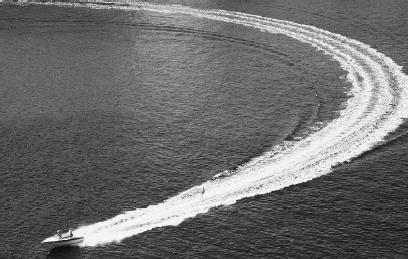
As an object moves through the air, it displaces the air in its path by pushing it forward and aside. The air moves away from the object as a series of compression waves (similar to the waves that a boat creates as it moves through the water). Now if you remember back to science class, you'll know that compression waves have another name: sound. So what happens when the object is moving faster than the speed of sound? Aha!


What happens is that the air gets pushed forward and aside faster than it can naturally escape. As long as the object is moving slower than sound, the compression waves outrace it and take most of their energy with them. But at supersonic speeds, the air keeps getting compressed and compressed and compressed as the object pushes it forward faster than the air can get away. So similarly to the freon in a refrigerator's compressor or the fuel mixture in the cylinder of a diesel engine, the leading air gets superheated by the crushing force of the supersonic object.

Basically, the supersonic object creates its own oven by compressing the air in front of it. Furthermore, if the object is made of an oxidizable material (such as iron, aluminum, or carbon) and the air is oxygen rich (such as the earth's atmosphere), then the object may quite literally burn up.

So the next time somebody tries to tell you that air friction causes a meteorite to burn up in the atmosphere, be sure to correct them and tell them all about supersonic shock.

Thursday, May 21, 2009

Mary Roach at TEDTalks

Mary Roach tells the crowd 10 things they didn't know about orgasm in this TEDTalks video.


(via)

Tuesday, May 19, 2009

Meet Ida!

ResearchBlogging.orgMeet Ida! a.k.a. Darwinius masillae. Ida is a 47 million year old fossil primate that was discovered in the Eocene fossil beds in Messel Germany. Ida was 24 cm. (~10 in.) from head to tail, meaning that--by some estimates--she probably weighed a little over a pound. In the picture below you can see the whole skeleton. It is fairly rare to find complete Eocene mammal skeletons--particularly primates. You can read online research paper about Ida here.

And Ida is just wonderful! On the downside, her skull was crushed, but on the upside, you can actually see where her fur was! (click on picture to embiggenize) Kewl!!!


You might have noticed that Ida kind of looks like a lemur. But there are morphological traits there that put her into the Cercamoniinae, from which modern anthropoids (monkeys and apes) evolved. In other words, we have ourselves a complete transitional primate fossil. This is super exciting!

Another thing we know abot Ida is that she was a juvenile. How do we know that, you ask? Check out her teeth!


You can clearly see that she has a mix of fully developed and developing teeth. For example, the M1 molars above are developed and in place but the M2 molars are still moving and the M3 molars probably haven't broken through the gums yet. We can compare this pattern to the dental development of similarly sized modern primates to estimate that Ida was about 80% of the way to full maturity when she died. And as I said before, there's much more in the paper.

Yay for science!

Franzen, J., Gingerich, P., Habersetzer, J., Hurum, J., von Koenigswald, W., & Smith, B. (2009). Complete Primate Skeleton from the Middle Eocene of Messel in Germany: Morphology and Paleobiology PLoS ONE, 4 (5) DOI: 10.1371/journal.pone.0005723

Thursday, February 19, 2009

Chelicerata Morphing Evolution


Chelicerata is the class of arthropods whose members are characterized by appendages (chelicerae) that appear before the mouth. The class includes species of spiders, ticks, mites, scorpions, horseshoe crabs, as well as others, including the extinct sea scorpions (pictured left). The common ancestor lived back in the Cambrian period.

Yale University's Peabody Museum of Natural History has put together a video that looks at the chelicerata evolutionary tree from a different perspective. They've used morphing technology to show the transformation of the ancestral Cambrian progenitor into each of the major sub-groups. Of course it's not perfect. For one thing, the ancestor must be an approximation based on the fossils of the time. Also, photographic morph isn't the most accurate depiction of how evolution works--especially when transitional fossils are sparse. Different body parts change at different rates and often go through stages that don't fit into the progressio of pictures in the morph.

Having said that, it's a very cool video. Check it out!

Wednesday, January 21, 2009

How to Prepare Cuttlefish Sashimi (Dolphin style)


ResearchBlogging.orgThe proper preparation of giant cuttlefish (Sepia apama) for consumption requires at least two steps. The unpalatable ink must be drained from the hapless cephalopod and the cuttlebone must be removed. Of course if you're planning on dining with a fork and knife, then step #2 isn't strictly necessary. But for the Indo-Pacific bottlenose dolphin (Tursiops aduncus), which swallows its meals intact, cuttlebone removal is obligatory.

This is what researchers Julian Finn, Tom Tregenza, Mark Norman have reported in a paper published today in PLoS ONE. The researchers--in SCUBA gear--positioned themselves in dolphin feeding grounds near Whyalla, Spencer Gulf and caught the feeding behavior with an HD video camera. They observed how the dolphins corralled the cuttlefish out into the open, pinned them to the ground, hammered them to death, shook the ink out of them, scraped them on the bottom to remove the cuttlebone, and finally bon appétite.


(clicking on image takes you to the full Fig. 1 image at PLoS ONE)

Here's how the researchers describe the steps involved:


  1. Prey positioning: Cuttlefish prey were typically hiding amongst dense brown algae. On encountering the cuttlefish, the dolphin flushed the prey away from algal cover into areas of open sand (Fig. 1a).

  2. Prey restraint: The dolphin then adopted a vertical position in the water column and pinned the prey down against the sand substrate.

  3. Pinned thrust kill: A rapid downward vertical thrust was effected by the dolphin using a powerful tail beat (Fig. 1b, 2a), accompanied by a whole body twist that broke the cuttlebone and/or cephalic cartilage (with a loud click audible to divers), instantly killing the cuttlefish.

  4. ‘Snout beating’ of the corpse: The corpse was then lifted into the water column on top of the beak (Fig. 1c, 2b) and repeatedly hit with the snout (up to 6 times), until dense clouds of ink were released (Fig. 1d, 2c). Beating continued until ink release diminished.

  5. Removal of intact cuttlebone: The dead prey was then returned to the sand where it was inverted and the dorsal surface of the cuttlefish body forcibly pushed into and along the sand substrate (Fig. 1e), thus scraping off the thin dorsal skin of the cuttlefish and releasing the cuttlebone, which then floated to the surface.

  6. Ingestion: The prepared cuttlefish was then consumed whole (Fig. 1f, 2d), or when the head and body were separated during beak beating, only the head was consumed (with attached digestive tract organs).


(clicking on image takes you to the full Fig. 2 image at PLoS ONE)

Naturally there are still questions to be answered. Two important ones are (1) Is this practice widespread or just limited to the dolphins observed? and (2) If it's widespread, is it inherited behavior or passed on culturally? The evidence seems to suggest that the practice is indeed widespread.

Repeated above-water observations of clean cuttlebones bobbing to the surface in association with passing pods of dolphins suggest that some or all of this behavioural sequence is not restricted to a single individual dolphin.


Whether the behavior is taught or inherited is still up in the air (or down in the water) and will require more research.

EDIT: This post is my very first Blogging Peer Reviewed Research post (Did you catch the nifty icon?). So as the total n00b that I am, I did things backwards: I wrote and published the post, then checked the guidelines to make sure that it conformed. You can imagine how aghast I was when I read this.

7. The post should contain original work by the post author -- while some quoting of others is acceptable, the majority of the post should be the author's own work.


A quick perusal confirmed that my post was closer to 50/50 than "the majority of the post being my own work." While I had a high degree of confidence that--as a first timer--they would let me slide, the prudent action is to add more of my thoughts.

It has long been known that dolphins can perform intricate tasks. It has been demonstrated that they can solve problems (such as navigating mazes) as well as perform stunts which they have been trained to do. This particular behavior can be broken into six distinct steps, most of which are each themselves intricate. Given the complexity of the behavior as well as what we know about dolphins, I feel pretty safe ruling out instinctual behavior. More research needs to be done of course.

An observation which I believe would support this hypothesis is if we found the behavior widespread among groups of dolphins who intermingle, but lacking in other groups of the same species who aren't in contact with the group who we prepares cuttlefish this way.

This brings up a question #3 for me. Is this behavior passed on by "passive" imitation or by active teaching? This is the question that I would really like an answer too. I've blogged in the past about how I think that the combination teaching and blind imitation is the root of human culture. In other words, despite my skeptic inclinations to "think for myself" and not just do as I'm told, it takes less energy and time to fill our huge cerebrums with knowledge if just soak up what we're taught than if we try to figure everything out ourselves. And that only works efficiently in a culture if we're also actively teaching what we know to others in our group.

But back to the dolphins, I just don't know-and this paper has only intensified my curiosity. I can't imagine that dolphins teach their young the way we (and apparently there's evidence that some other primates, such as japanese macaques, also) do. Anyway, hopefully now I'm within the required guidelines.

Julian Finn, Tom Tregenza, Mark Norman (2009). Preparing the Perfect Cuttlefish Meal: Complex Prey Handling by Dolphins PLoS ONE, 4 (1) DOI: 10.1371/journal.pone.0004217

Sunday, April 13, 2008

Zimmer interviews Gary Marcus

NYU Psychology professor Gary Marcus has just released his latest book Kluge about how the human brain is the product of tinkering. It is really one of the best refutations of the argument from design. Here he is interviewed by Carl Zimmer.

Sunday, February 24, 2008

Science Debate 2008 update

Several prominent scientists and other public figures have come forward and started making videos endorsing the debate. You can find them here on YouTube.

Below is a small sampling:

Laurence Krause


Kevin Knobloch


Sheril Kirshenbaum

Wednesday, July 04, 2007

These bloggers rock!


Featuring:
John Logsdon(Sex, Genes & Evolution)
Jonathan Badger(T. Taxus)
Yersinia
Moselio Schaechter(Small Things Considered)
Tara Smith(Aetiology)
Larry Moran(Sandwalk)

Tuesday, June 12, 2007

R.I.P. Mr. Wizard!

Don Herbert, a.k.a. "Mr. Wizard," Died today at the age of 89.

I'm a bit young for the original run of Watch Mr. Wizard, but I did grow up on the reruns. I absolutely loved that show.

Whenever anyone asks me who the most important person in science is, I always answer Mr. Wizard (or his modern counterpart, Bill Nye). The simple reason is that he made science fun for a large number of children. I don't want to take anything away from all the great scientists who've made science as robust as it is today, but many of them might have chosen a different carreer path if it hadn't been for Mr. Wizard. And I don't want to take anything away from all the great science teachers who've influenced children around the world, but none had the reach of Mr. Wizard.

Good bye Don Herbert. You will be sorely missed.

Sunday, April 15, 2007

This bone makes sperm!

God is alleged to have made Eve from one of Adam's ribs. Now scientists are a step closer to knocking her up with one of his ribs. Scientists in the UK have created primitive sperm cells from bone marrow stem cells.


They have yet to make fully functioning human sperm this way, but last year, they were able to achieve that with mouse stem cells. The obvious benefits would be for infertile men (eg. testicular cancer survivors) to create ther own sperm. But scientists caution that there's still a lot we don't know.

Experts caution that turning sperm stem cells derived from bone marrow into functioning sperm would be no small feat. "Before we get too excited about this being a new form of infertility treatment, these cells cannot as yet be made into functioning sperm, so we have no idea if they can pass 'the acid test' – the ability to fertilise female eggs as is achieved with donor sperm in IVF treatment,” says Malcolm Alison of the London School of Medicine and Dentistry in the UK.

Stem cell biologist Harry Moore at the University of Sheffield in the UK worries that sperm created from bone stem cells could have undetectable abnormalities that could cause disease in offspring. "Unfortunately, these stem cell manipulations can lead to permanent genetic changes which would make them unsafe to use especially as a potential sperm or egg,” he says.


Anyway, this seems really exciting. But as is that wasn't enough, there is another potential application of this technology.

And women may be able to use the technique to produce sperm, allowing lesbian couples to have their own biological daughters. Nayernia says that researchers have produced the same early-stage sperm cells in mice from bone marrow cells taken from female mice.

"It should be perfectly possible for fully functional mature sperm cells to be made from these female-derived cells too," he told New Scientist.


Come on, aren't you just thrilled to the bone?

Thursday, February 22, 2007

Bacteria wick through fungal hyphae


Laser Scanning Microsope photograph of fungi Fusarium oxysporum showing the hyphae (green threads)

I saw this article today on ScienceDaily. It talked about how soil bacteria use hyphae (thread-like structures) of the mycelia (branching, vegetative part) of soil fungi in order to get around. Basically, the bacteria use fungal mycelia as a grand underground highway network.

This is interesting, but the reason I felt compelled to blog about this article is the following quote.

“We deliberately make the bacteria work their way upwards against gravity so that people can’t say there could be a small amount of water trickling down and carrying the bacteria with it,” says Wick.


Dr Lukas Y. Wick: what an appropriate name. I just think that's funny.

Friday, January 19, 2007

The Science Blogging Anthology


Super science blogger Coturnix has released the science blogging anthology. It is a collection of the top 50 science blog posts as determined by other science bloggers. I didn't participate in the post review (due to the timetable limited by The North Carolina Science Blogging Conference, the whole nomination and selection process took a quick 3 weeks--half of which I was on vacation), nor did I submit a post of my own for consideration. (I felt bad as a mere lab monkey trying to rub shoulders with bona fide scientists.) But had I chosen to submit a post, it probably would've been my Von Neumman infinite series post--I really like that one.

Anyhoo, I've read most of the posts in the anthology and therefore highly recomend the book to anyone interested in science.

Tuesday, December 19, 2006

Tripoli 6 sentenced to death!

Scientists and judges have quite different ways of resolving issues. Courts set up a dichotomy of litigants, with each side getting equal weight (at least fair courts work that way). Each side gets to argue its case before the court (judge and/or jury of peers), and the side with the more persuasive argument wins. Each side gets to present evidence and question the opponent’s evidence, while the judge decides what evidence is admissible.

Science tries to accrue knowledge and reach the truth through research. Scientists look at the evidence, make hypotheses, and then test the hypotheses to see how valid they are. Their conclusions are then published in peer-reviewed journals where other scientists may scrutinize the work and gauge its validity. A consensus among scientists determines what is the accepted "truth." The journal’s editors decide which papers are worthy of publishing.

They sound similar, and in many regards they are, but there are a few crucial differences.

Science is an “open source” discipline. Scientists put all of their research and results out there for all to see and evaluate—including results that contradict their findings. It is considered a scandal when it is revealed that a scientist hid results from his peers and the public. (Is it a coincidence that most of the achievements that critics of science point to as being evil—atomic weapons, Nazi eugenics, etc.—were the result of science being performed behind closed doors? Just a thought.) In most court cases, the competing sides are under no obligation to disclose certain damning evidence to each other. In fact, attorney-client privilege often forbids it. This stems from the different mentality that the “truth” (verdict) is achieved by dispute resolution.

Judges are generally the preeminent experts in matters of law. This is ideal for complicated legal disputes. The "jury of peers" is a group of citizens who need only have an understanding of the law. This works well for most simple legal issues. "Scientific peers" are experts in the field of study in question. This is an absolute necessity for matters of scientific inquiry. Two scientists arguing dissenting theories can sound like they are speaking Greek (literally) to a layperson or even scientists outside of their field of expertise.

What happens when the two meet? This is a very sticky situation. Scientific disputes should be fought in the arena of science. Judges and juries are not qualified to evaluate an issue for which scientists have yet to reach a consensus. This sometimes happens, though. Even worse, scientific disputes in which a consensus has already been reached are oftentimes brought into the courtroom to be argued anew. Here they are subject to different rules, and the side with the better rhetoric can win the day.

Clearly, reforms are needed for when science meets law. I am however optimistic. The recent decision in the Dover, PA “monkey trial” and the reversal of the silicone implant ban give me hope for the future. Perhaps in ten years the courts will have institutionalized an organic system that is true to science for dealing with “science meets law” cases.

For this reason, our legal system, despite its problems, is a shining beacon of scientific enlightenment compared to many. This brings me to Libya.

A while back, I wrote a couple of posts about the Tripoli 6. These are the five Bulgarian nurses and Palestinian doctor who had been falsely accused of intentionally infecting Libyan children with HIV as part of a nefarious CIA/Mossad plot. Scientists stepped in and looked at the evidence. Their verdict was that the children were all infected (probably by the reuse of needles) prior to the arrival of the medics. They are clearly innocent! Then the Libyan court system stepped in and came to its verdict: guilty! Sentence: death!

Crowds cheered outside when the verdict was announced. I can’t really blame them so much (although I would never cheer anyone’s death sentence). It is unlikely that they knew about the scientific evidence, and quite likely that they wouldn't understand it even if they did know about it. It is truly sad and outrageous.

Last week Mickey Grant, maker of the documentary Injection about the plight of the medics, made a last ditch call to try to rally more worldwide awareness about this travesty. I really wish that I knew some real journalists who I could have pressured to cover the story. Alas, all I could do was sit back, watch the verdict, and feel impotent about the whole thing. This makes me sick to my stomach.

I still have hope, but I can’t say it’s realistic.

Thursday, October 26, 2006

Crystal Lava

This last week, The Geological Society of America held its annual meeting in my home town of Philadelphia. There were all sorts of presentations, workshops, seminars and other events. Naturally I didn't attend any of it since I had more mundane things to do, like thermal analysis. I did follow most of the highlights from the meeting though, on ScienceDaily. Yet the geological story that really caught my attention wasn't from the meeting at all, but from a September issue of Nature. In Decompression-driven Crystallization Warms Pathway for Volcanic Eruptions, Dr. Katharine Cashman of the University of Oregon argues that rapid crystallization of magma causes it to heat up by as much as 100°C.

The reason may be counter-intuitive, but the more magma crystallizes, the hotter it gets and the more likely a volcano will erupt, according to a team of scientists that includes a University of Oregon geologist. The knowledge likely will aid monitoring of conditions at Mount St. Helens and other volcanic hot spots around the world.


It certainly does seem counter-intuitive: decompression generally causes cooling. That's the basis for how refrigeration works. In the diagram on the right (thanks to Wikipedia), the two places where there are pressure chages are the Compressor and the Expansion Valve. The Compressor increases the pressure and superheats the refrigerant. The Expansion Valve causes decompression and auto-refrigeration. This is how most materials behave.

I remember when I was a kid, my grandfather let me shoot his 22 caliber rifle at a spent aerosol can. The can still had pressure in it, because when I hit it (we'll just pretend it was on my first shot), the rapid decompression caused the can to fly (and the momentum from the bullet probably helped out there too). When we recovered the can, it was covered with frost and very cold to the touch.

Why then does magma behave so counter-intuitively? The answer lies in a process called fractional crystallization. From wikipedia:

Fractional crystallization is one of the most important geochemical and physical processes operating within the Earth's crust and mantle. Fractional crystallization is the removal and segregation from a melt of mineral precipitates, which changes the composition of the melt.

Fractional crystallization in silicate melts (magmas) is a very complex process compared to chemical systems in the laboratory because it is affected by a wide variety of phenomena. Prime amongst these is the composition, temperature and pressure of a magma during its cooling. The partial pressure of vapor phases in silicate melts is also of prime importance, especially in near-solidus crystallization of granites.

In the case of the above study, water seems to be the key. At the pressures existent deep in the Earth, water is dissolved in the magma preventing crystallization. Think about a glass of salt water. The salt isn't crystalline because of the presence of water keeps it in solution. However, if you leave the glass on the counter for the water to evaporate, you'll see the salt begin to crystallize out. A similar process appears to happen to the magma as it moves up towards the surface of the Earth. About 2 kilometers from the surface, decompression causes the pressure to drop enough that the trapped water is able to turn to steam and escape the magma. As a result, certain minerals in the magma begin to crystallize. But shouldn't the escaping steam cool the magma? How does the crystallization cause it to heat up?

The short answer is that crystallization is exothermic. This means that it produces heat. Melting and vaporization are endothermic; they require heat. Another example of an exotherm is an oxidation reaction, such as combustion. Since both exothermic and endothermic things are happening to the magma, the exotherms must be winning. The tool of choice for measuring exotherms and endotherms is the Differential Scanning Calorimeter (DSC).

The basic idea of the DSC is to measure the difference in heat flow between a sample and a reference standard. The set-up is pretty simple. Two identical sample pans are placed side by side over two very sensitive temperature probes (thermocouples). One pan contains a sample of the material to analyze, and the other is empty and acts as the standard. This whole set-up is inside an oven (or a chiller) where the temperature can be carefully controlled. As the temperature inside the instrument changes, the thermocouples detect any difference in heat-flow between the two pans.

If an endothermic event (like a melt) occurs, then the sample will absorb some of the heat it is being given for the melt process, while the standard will continue to use all its heat for temperature increase. The thermocouples will detect the temporary slight difference in temperature and send it to the computer. On the DSC chart, this will show as a downward facing peak.

If an exothermic event (like crystallization) occurs, then the sample will heat up and the thermocouples will detect it. If the exothermic event is encountered during a cool down, then the sample either briefly stops cooling, momentarily heats up a tad, or just cools at a slower pace than the standard. On the DSC chart, this will show as an upward facing peak.

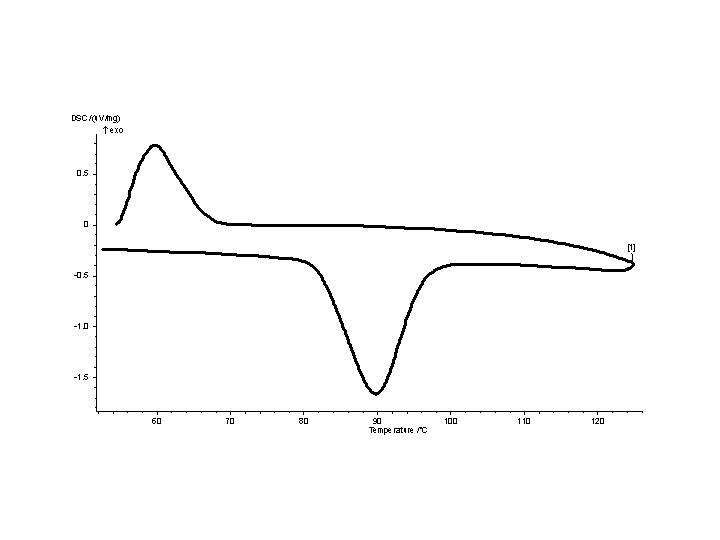
The chart below is a DSC scan I ran of a material known as a plastic crystal. Plastic crystals are a class of compounds that store and release heat through a reversible solid-solid transition from an ordered crystal to a less ordered plastic state. The phase transition of a plastic crystal involves more energy than the heat of fusion. Plastic crystals are therefore very useful in industry for heat storage; they are sort of like heat capacitors. This is why I thought it would make a good example. Obviously whatever is crystallizing out of the magma must also have a high crystallization enthalpy in order to counteract the endotherms associated with decompression and still raise the temperature by 100°.


Allow me to explain what is happening in the above chart. I tested the plastic crystal sample starting at 20°C, then slowly ramped the temperature up to 120°C, then let it cool back down to 20°C. That is why the curve doubles back on itself--the x-axis of the chart is increasing temperature. The scan begins at the left (the lower curve) and moves towards the right. The first event is an endotherm around 80°C. This corresponds with the sample going from a crystalline to a plastic phase. Unlike the material in the example chart on the wikipedia page (which offers a very good explanation if you're still scratching your head after reading me), the plastic crystal is crystalline at room temperature and becomes amorphous before melting (I didn't take it up that high, but if I had, you would see that the melt endotherm was much smaller than the decrystallization endotherm). This happens because when the material hits about 80°C, it begins to absorb heat in order to break up the crystals--heat that would otherwise be used to raise the temperature. The standard (empty pan) undergoes no such transition, and the instrument detects the difference.

The next event happens at around 120°C when the curve doubles back to the left. This is where the temperature begins to drop back down. No "heat event" happens here. The final event begins at about 70°C. This is the exotherm of crystallization. Here the sample begins to heat up faster than the standard as it crystallizes. I'm not exactly sure why there is a 10°K (It is customary in thermal chemistry to use kelvins when talking about change in temperature. An increase of 1°K is equal to that of 1°C.) discrepancy between the crystallization and decrystallization temperatures, but that kind of thing is not unusual.


So what appears to be happening in a volcano is that first the magma decompresses (and cools some) as it flows towards the surface and nears the dome of the volcano. Second, the decompression allows trapped water to escape the magma (and cool it some) in the form of steam. This should manifest itself to the observer as a series of minor "steam heavy" eruptions from the mountain. Third, the loss of water allows minerals in the magma to undergo crystallization. This crystallization, like that of the plastic crystal, is highly exothermic and overpowers the previous endotherms raising the temperature of the magma by up to 100°K. :-) Fourth, this exotherm greatly increases the energy of the magma just as it's getting near the dome of the volcano. This makes for a very explosive situation.

And so with that, I shall leave you with a bang! (courtesy of Exploring the Environment)


Mt. St. Helens 1980 eruption animation